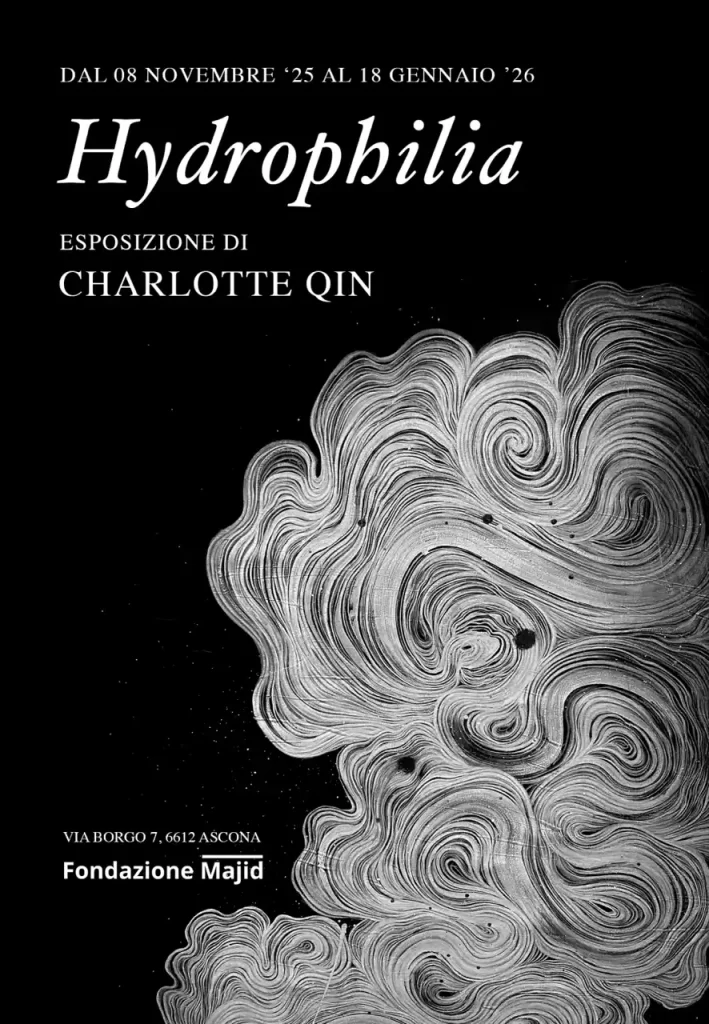
The Foundation has supported Charlotte Qui’s Hydrophilia project, backing its promotional and outreach activities.
The project, which focuses on water as an essential resource and a principle of interconnection between natural systems, forms part of artistic research addressing environmental issues. Through this initiative, the Foundation reaffirms its commitment to supporting contemporary practices aimed at raising awareness and encouraging reflection on the relationships between the individual, the environment and sustainability.
Hydrophilia is a state of being an obsession an intimacy a devotion.
Charlotte Qin
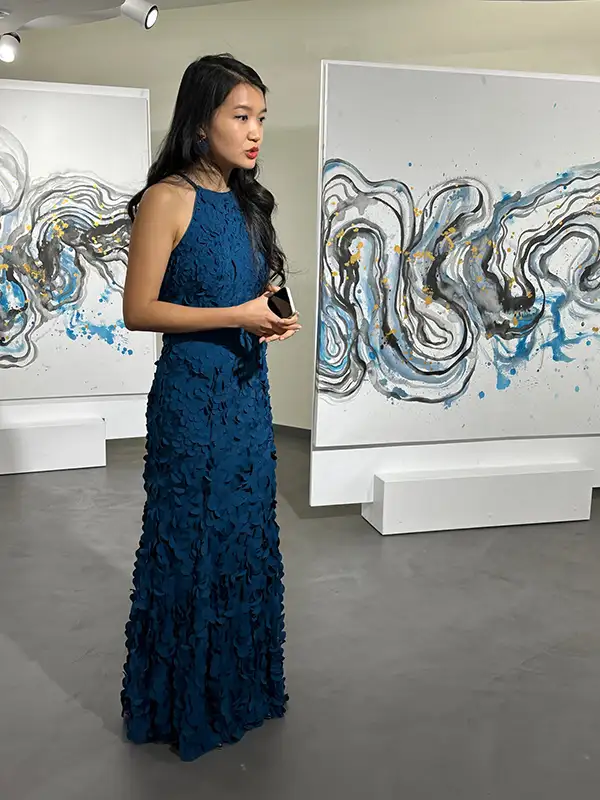
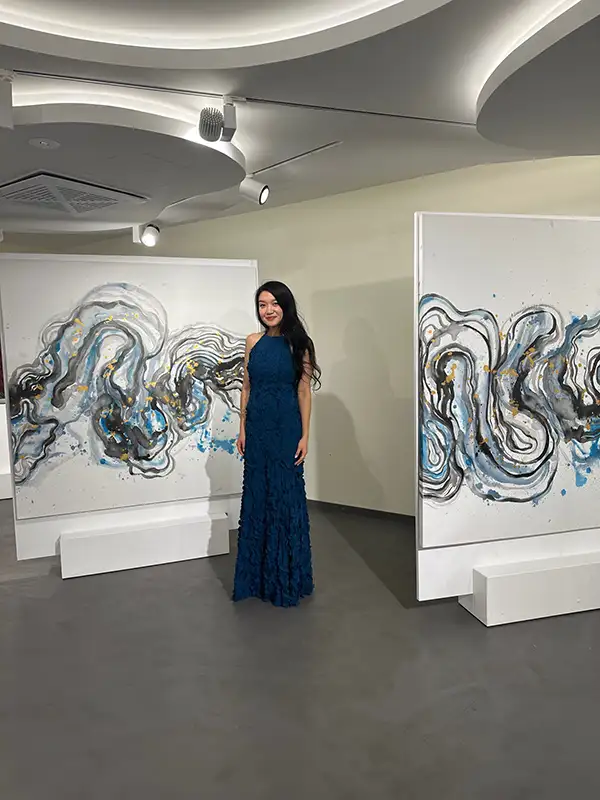
“Spanning five years of practice, Hydrophilia brings together eighty works across painting, drawing, calligraphy, and sculpture. This exhibition is an emotional and visual archive, offering a rare cartography of becoming:
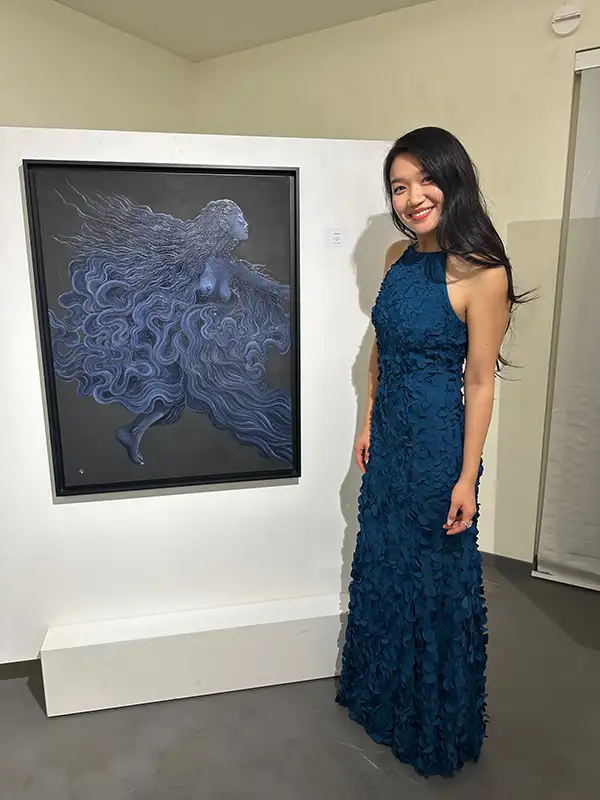
- a woman becoming river,
- data becoming memory,
- gesture becoming prayer.
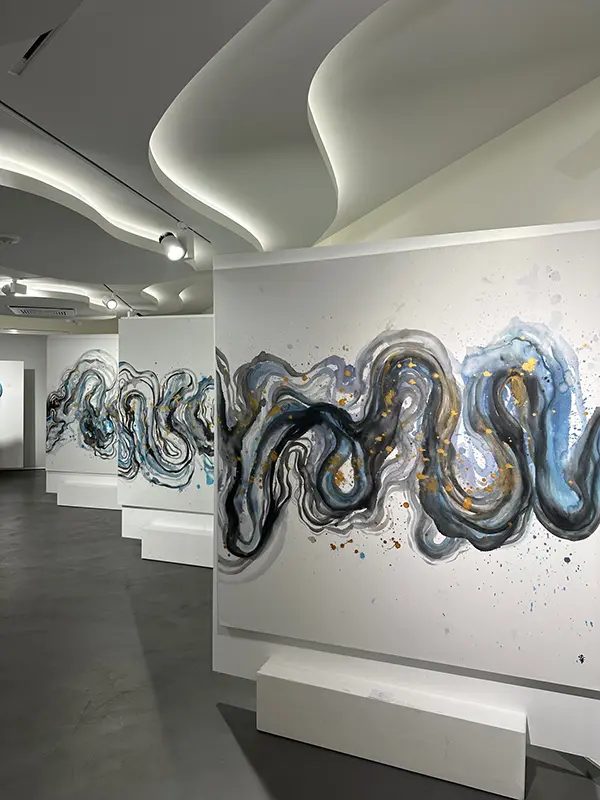
To stand before these works is to feel a tide moving through gesture. They do not illustrate water; they behave like it: they leak. They reflect. They resist contaiharlotte Qinnment.
Black works trace the earliest contours of permeability.
Blues open onto depth and grief: rivers, rains, glaciers, a climate under pressure.
Gold gathers as prayer—light held at the surface, a quiet insistence on grace.
Read together, these pieces form an inner hydrography: where womanhood, form, and faith are inseparable.
Hydrophilia is an open confession of obsession—an offering from one body to another. A reminder that water remembers, even when we forget. “
Charlotte Qin
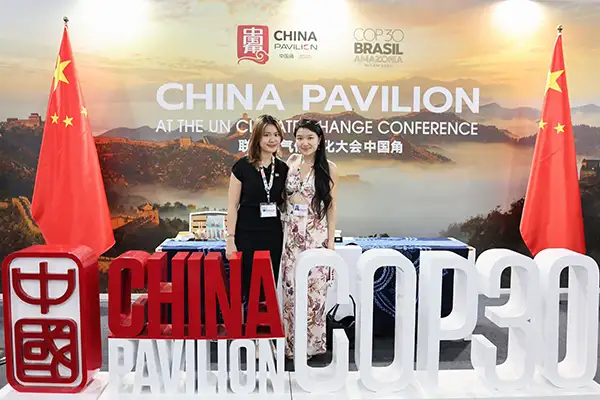
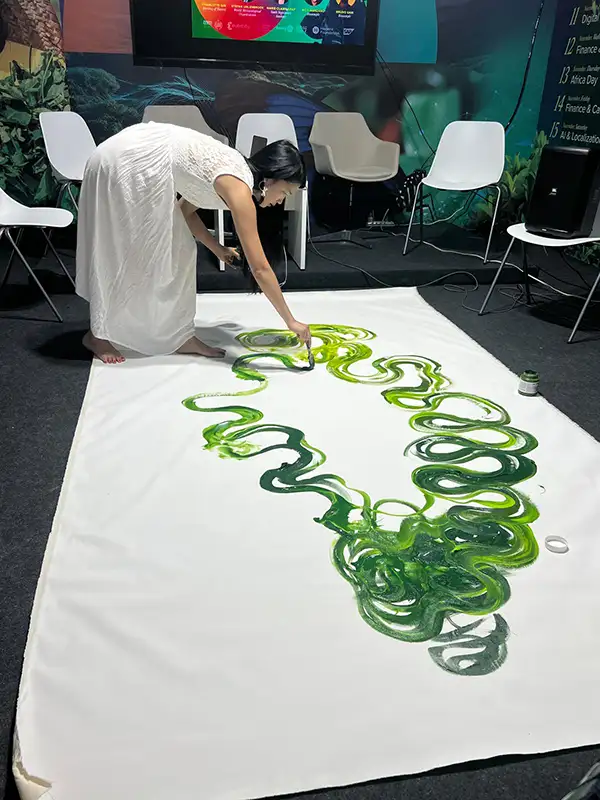
In November 2025, COP30, the United Nations Climate Change Conference, took place in Belém, Brazil. There was a strong presence of environmental movements and indigenous communities. Artists, including Charlotte Qin, were also invited to contribute.